Expedia Group

Expedia group /
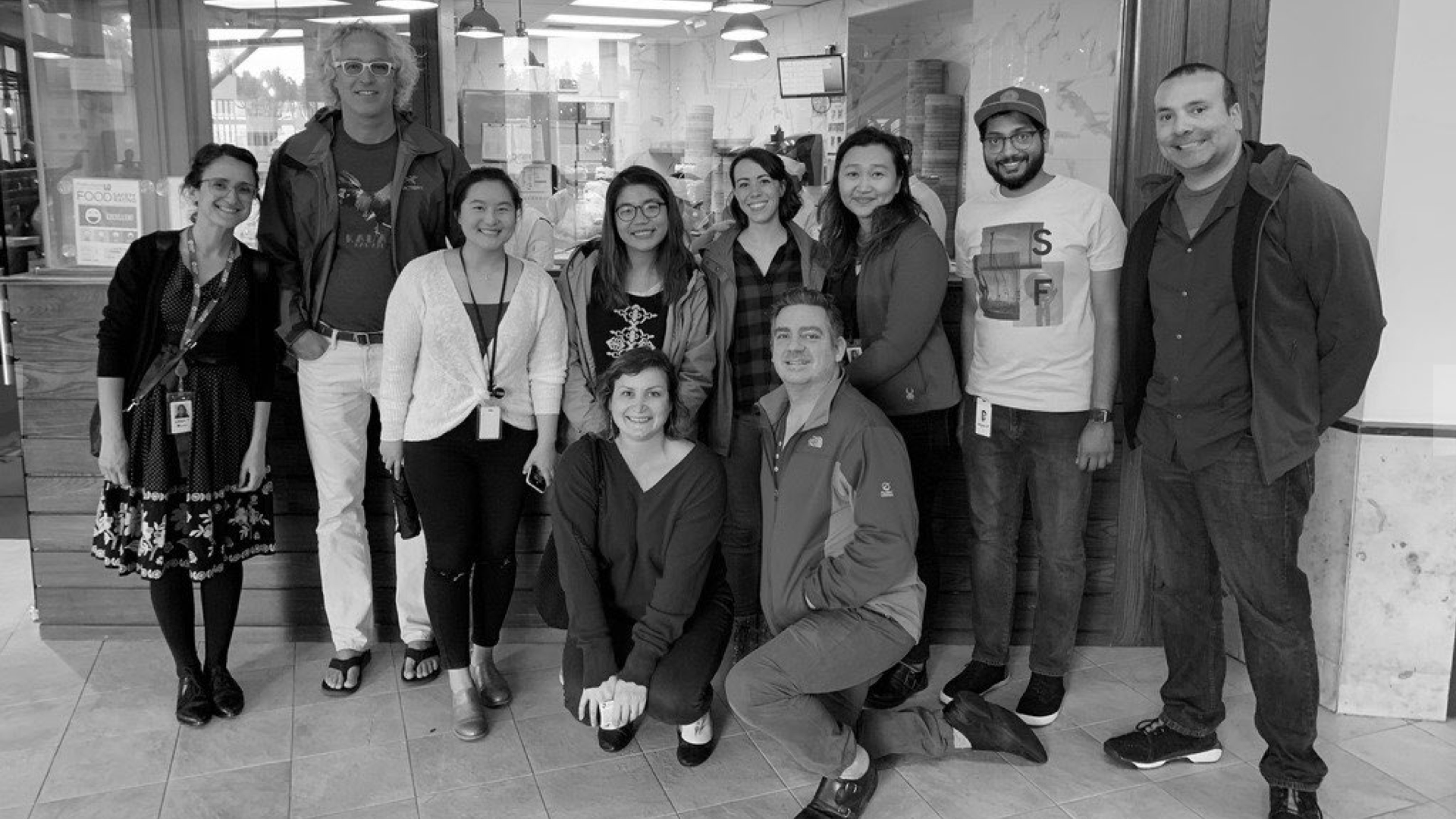
Led a team of fourteen multidisciplinary designers for Expedia Group's Conversational Platform – aka Chatbot.
Worked closely with direct reports to increase design confidence, introduced new opportunities to cross-collaborate, raised awareness around accessibility, and fostered an inclusive and diverse environment that encouraged individual voices to come together as a collective to deliver on design value. Kicked off an augmented staff of nine to help support various initiatives, including rapid prototyping.
Became Expedia Group’s default Conversational Platform across all brands due to our design velocity and efficiencies.
Shipped 75+ skills in six months.
My team & their functional areas
Fourteen Product Designers, reporting up to two Senior Managers
Nine contractors: Research, Prototype, and Product Design
My role & responsibilities
Director, User Experience
Reporting up to Product, I was responsible for Expedia Group’s Conversational Platform UX & UI and its respective Product Design team
Design challenge —
How might we create a more cohesive user experience across all conversational points (chatbots) for all Expedia group brands?

design intent —
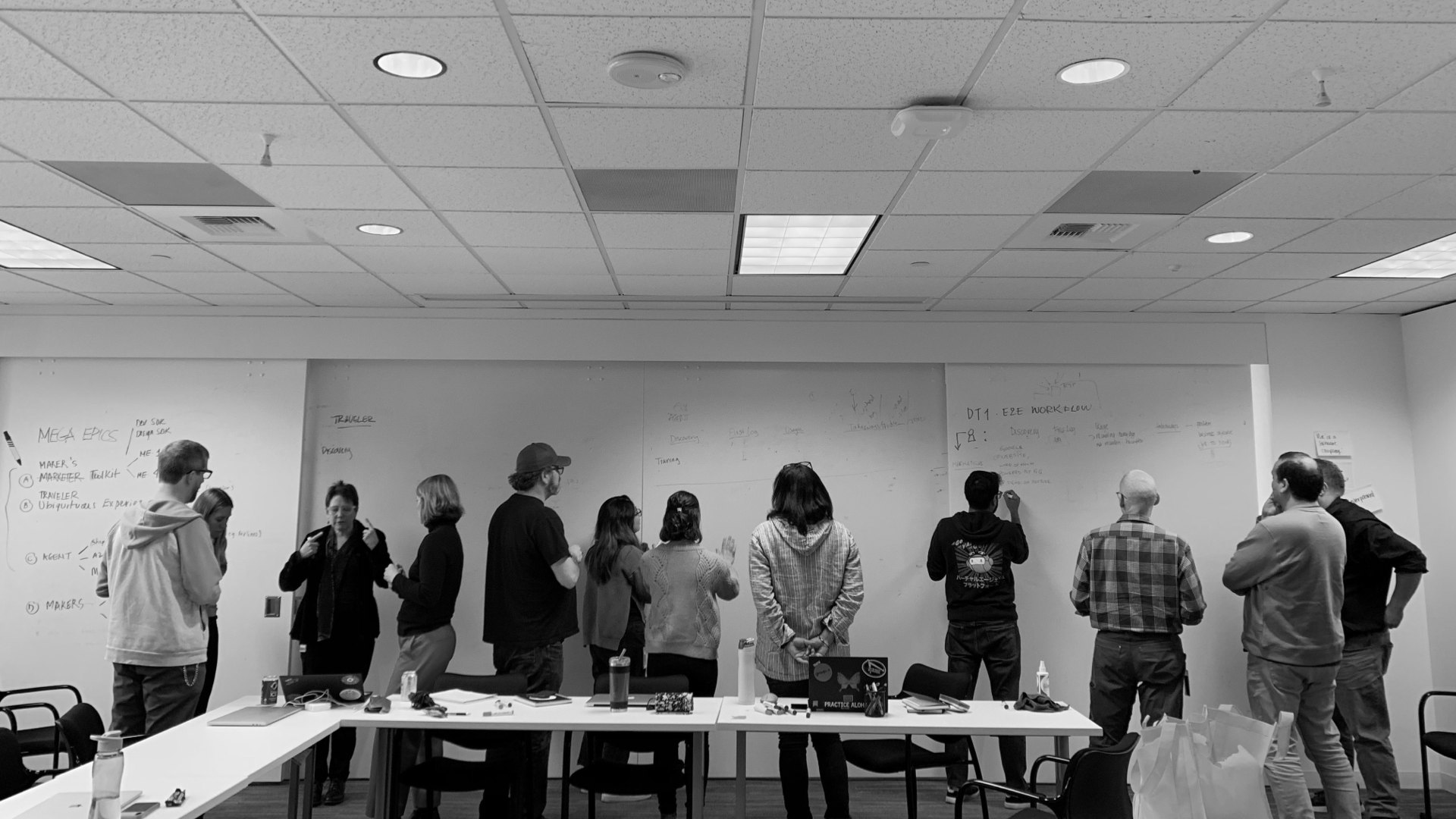
Deliver a seamless and intuitive travel experiences by creating a cohesive user experience across all conversational touch points, ensuring customers receive consistent, personalized, and efficient service no matter how they interact with Expedia Group’s brand portfolio and business partners.

There were twenty-eight designers spread across multi-brands working on chatbot entry point.
Design Considerations —
How might we bring alignment across all brands and stakeholders?
Ensure that everyone—from product managers and engineers to customer service teams and end-users—contributes to a unified vision
Employ a human-centered design process by gathering diverse perspectives and insights, fostering innovation and driving consensus
Develop cohesive, user-friendly experiences across all conversational interfaces, ensuring that every interaction reflects our commitment to quality and customer satisfaction
Deliver solutions that meet the needs of our travelers and stakeholders alike, enhancing the overall travel experience
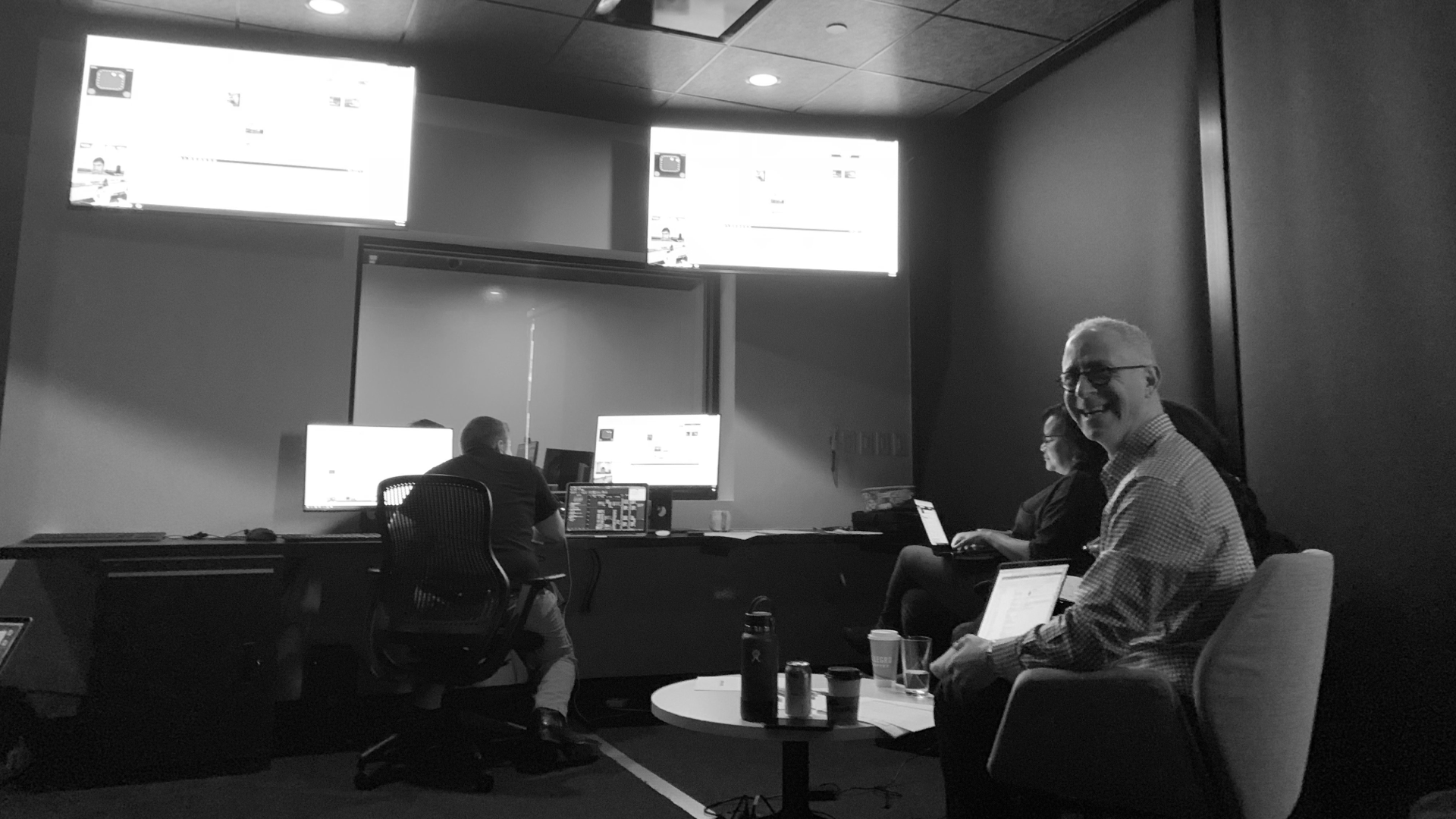
Usability testing at Expedia Group’s VBRO Research Lab in Austin, TX.
Design process —
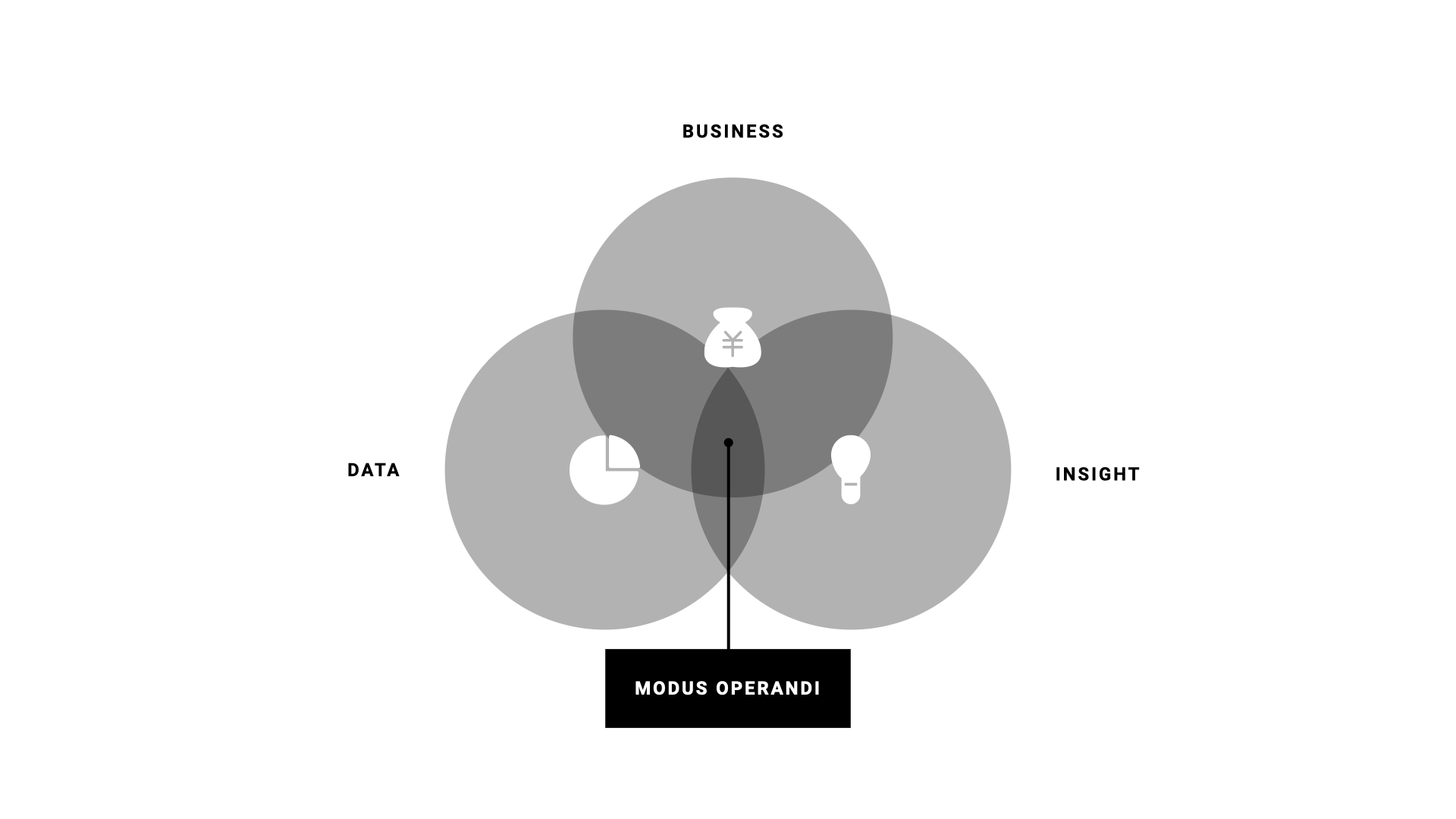
Design Principles —
User-Centered Design
— Understand the travelers' needs, pain points, and goals through user research.
— Prioritize simplicity and clarity to reduce cognitive load.
— Use inclusive design practices to ensure accessibility for all users.
Natural Language Processing (NLP) Optimization
— Design for natural, conversational language to make interactions intuitive.
— Account for common travel-related phrases, misspellings, and multilingual capabilities.
— Incorporate context-awareness to maintain conversation continuity.
Personalization
— Use user profiles and past interactions to offer tailored recommendations (e.g., flights, hotels, activities). — Allow users to customize preferences, such as budget, interests, or travel styles.
Clear Guidance and Navigation
— Provide clear prompts and quick reply buttons to guide users efficiently.
— Use fallback mechanisms with friendly error messages if the chatbot doesn't understand a query.
— Offer options to connect with a human agent when necessary.
Task-Oriented Focus
— Focus on key tasks users are likely to perform, such as searching for flights, booking accommodations, or checking itinerary details.
— Break complex tasks into manageable steps to ensure smooth progression.
Visual Design and Branding
— Use a visually appealing interface consistent with the travel company's brand identity.
— Include images, maps, and other rich media to enhance the experience when appropriate.
— Maintain a balance between text-based and visual content to avoid clutter.
Trust and Transparency
— Be transparent about data usage and privacy policies.
— Clearly communicate pricing, terms, and conditions related to bookings.
— Acknowledge limitations (e.g., “I can help with flight searches but not visa processing”).
Speed and Responsiveness
— Ensure the chatbot responds quickly to user inputs to maintain engagement.
— Optimize loading times for any multimedia or external API integrations.
Contextual Awareness
— Leverage location data to provide relevant travel options (e.g., local attractions or weather updates).
— Adapt to seasonal trends, such as suggesting holiday destinations during peak travel seasons.
Error Handling and Recovery
— Anticipate potential errors and provide clear, actionable feedback to users.
— Allow users to easily correct inputs or clarify their queries without starting over.
Multichannel Consistency
— Ensure a consistent user experience across platforms (e.g., web, mobile, and voice assistants).
— Synchronize data so users can switch between devices seamlessly.
Feedback Loops
— Provide mechanisms for users to give feedback on their chatbot experience.
— Use analytics to track interactions, identify pain points, and continuously improve the system.
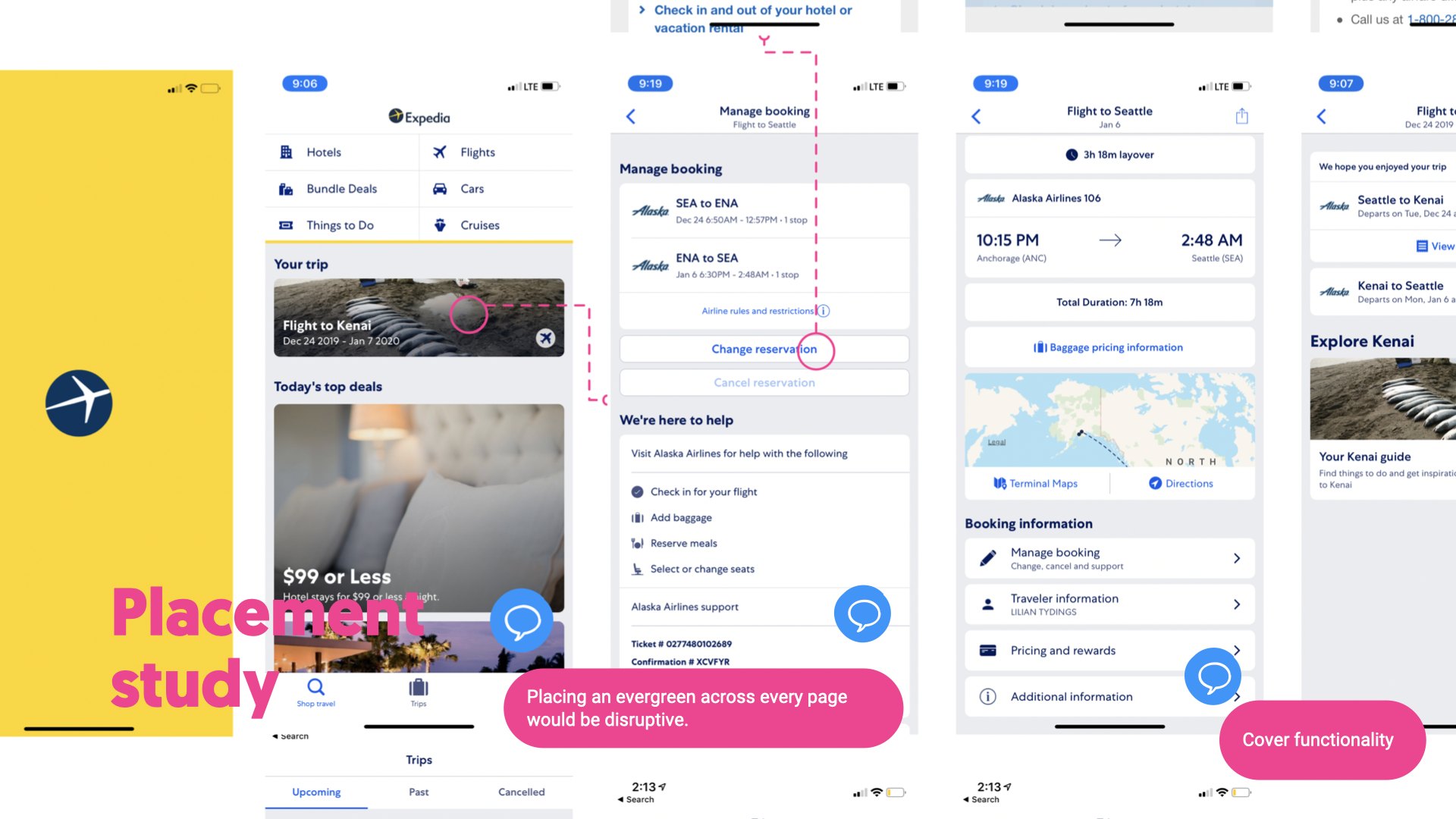
Chatbot Placement Study —
chatbot WORKFLOW —
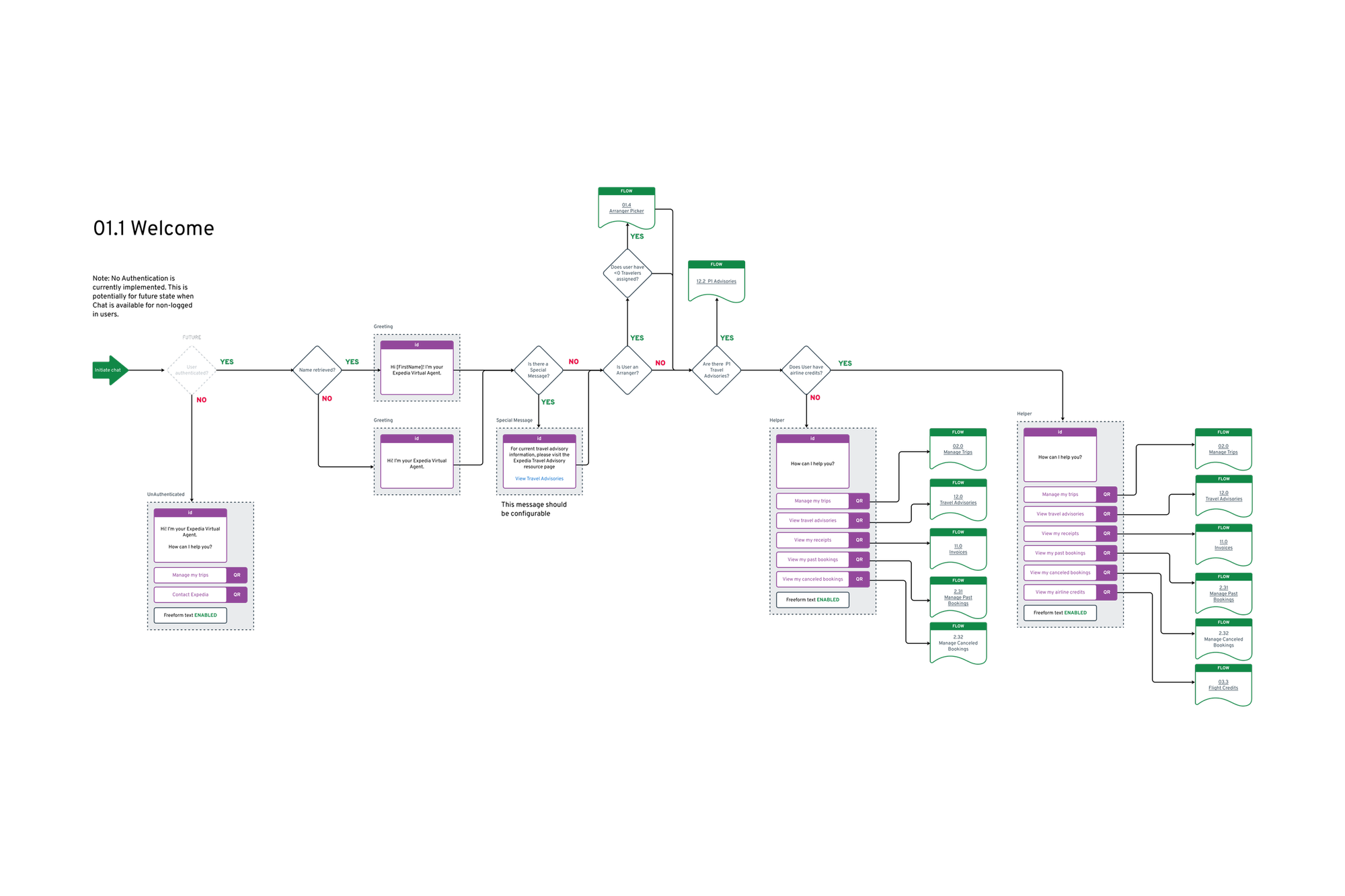
Example of Chatbot Workflow
Design OUTCOME —
— Delivered over 75+ skills within six months, accelerating feature availability and enhancing user engagement.
— Transitioned core technology from a third-party solution to an in-house platform, successfully implementing the system for Expedia Group's largest client, Chase Bank.
— Spearheaded the vision and development of a backend tool enabling Expedia Group’s customers to configure and manage virtual assistants for their organizations.
— Oversaw a team of 20+ direct reports, including senior managers and directors, driving increased delivery velocity and achieving an 83% growth in product adoption.